Neuro-Ophthalmic Presentation of Hyperviscosity Syndrome Uncovering Multiple Myeloma Diagnosis
DOI:
https://doi.org/10.60591/crspmi.473Keywords:
Blood Viscosity, Eye Diseases, Multiple Myeloma, Retinal HemorrhageAbstract
Multiple myeloma, characterized by uncontrolled plasma cell proliferation in the bone marrow and excessive immunoglobulin production, can lead to hyperviscosity syndrome, posing an oncologic emergency.
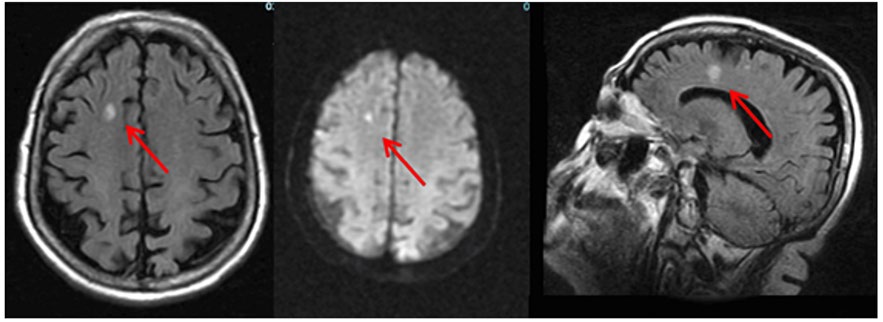
We present the case of an elderly woman exhibiting neuro-ophthalmological symptoms such as confusion, frontal syndrome, ataxia and deteriorating vision, alongside retinal hemorrhages. Diagnosis revealed IgG/Kappa multiple myeloma with bone marrow involvement, confirmed through further investigations. The patient was also found to have high blood viscosity. Lumbar puncture and cerebral magnetic resonance imaging (MRI) supported the diagnosis, indicating elevated protein levels and ischemic lesions. Prompt treatment, including dexamethasone pulses, therapeutic plasma exchange and chemotherapy, led to marked improvement.
This case underscores the importance of thorough ophthalmic and systemic evaluations in patients with suspected hyperviscosity, as neuro-ophthalmological symptoms may signal a life-threatening hematologic condition.
Downloads
References
1. Rajkumar SV, Dimopoulos MA, Palumbo A, Blade J, Merlini G, Mateos MV, et al. International Myeloma Working Group updated criteria for the diagnosis of multiple myeloma. Lancet Oncol. 2014;15:e538-e548.
2. Palumbo A, Anderson K. Multiple myeloma. N Engl J Med. 2011;364:1046-60.
3. Mehta J, Singhal S. Hyperviscosity syndrome in plasma cell dyscrasias. Semin Thromb Hemost. 2003;29:467-71.
4. Gertz MA. Acute hyperviscosity: syndromes and management. Blood. 2018;132:1379-85. doi: 10.1182/blood-2018-06-846816.
5. Kwaan HC. Hyperviscosity in plasma cell dyscrasias. Clin Hemorheol Microcirc. 2013;55:75-83.
6. Mullen EC, Wang M. Recognizing hyperviscosity syndrome in patients with Waldenstrom macroglobulinemia. Clin J Oncol Nurs. 2007;11:87-95.
7. MacKenzie MR, Fudenberg HH, O'Reilly RA. The hyperviscosity syndrome. I. In IgG myeloma. The role of protein concentration and molecular shape. J Clin Invest. 1970;49:15-20.
8. Dumas G, Merceron S, Zafrani L, Canet E, Lemiale V, Kouatchet A, et al. Syndrome d’hyperviscosité plasmatique. Rev Méd Interne. 2015 ;36:588–95.
9. Debureaux PE, Harel S, Parquet N, Lemiale V, Siguret V, Goubeau L, et al. Prognosis of hyperviscosity syndrome in newly diagnosed multiple myeloma in modern-era therapy: A real-life study. Front Immunol. 2022;13:1069360. doi: 10.3389/fimmu.2022.1069360.
10. González-Calle V, Rodriguez-Otero P, Calasanz MJ, Guijarro M, Martínez-López J, Rosiñol L, et al. High-risk cytogenetic abnormalities in multiple myeloma: PETHEMA-GEM experience. Hemasphere. 2024;8:e70031. doi:10.1002/hem3.70031
11. Pruzanski W, Watt JG. Serum viscosity and hyperviscosity syndrome in IgG multiple myeloma. Report on 10 patients and a review of the literature. Ann Intern Med. 1972;77:853-60.
12. Talamo G, Farooq U, Zangari M, Liao J, Dolloff NG, Loughran TP Jr, et al. Beyond the CRAB symptoms: a study of presenting clinical manifestations of multiple myeloma. Clin Lymphoma Myeloma Leuk. 2010;10:464-8. doi: 10.3816/CLML.2010.n.080.
13. Coull BM, Beamer N, de Garmo P, et al. Chronic blood hyperviscosity in subjects with acute stroke, transient ischemic attack, and risk factors for stroke. Stroke. 1991;22(2):162-168.
14. Tang M, Zhao R, van de Velde H, Tross JG, Mitsiades C, Viselli S, et al. Myeloma Cell Dynamics in Response to Treatment Supports a Model of Hierarchical Differentiation and Clonal Evolution. Clin Cancer Res. 2016;22:4206-14. doi:10.1158/1078-0432.CCR-15-2793
15. Dimopoulos MA, Terpos E, Boccadoro M, Moreau P, Mateos MV, Zweegman S, et al. EHA–EMN Evidence-Based Guidelines for diagnosis, treatment and follow-up of patients with multiple myeloma. Nat Rev Clin Oncol. 2025;22:680–700. doi:10.1038/s41571-025-01041-x
Downloads
Published
How to Cite
Issue
Section
Categories
License
Copyright (c) 2026 Rita Noversa de Sousa, Ângelo Fonseca, Paula Salgado, André Azevedo, Ana P. Ferro

This work is licensed under a Creative Commons Attribution 4.0 International License.